Calcium repeatedly ranks in the top 3 to 10 most searched terms online when it comes to osteoporosis.
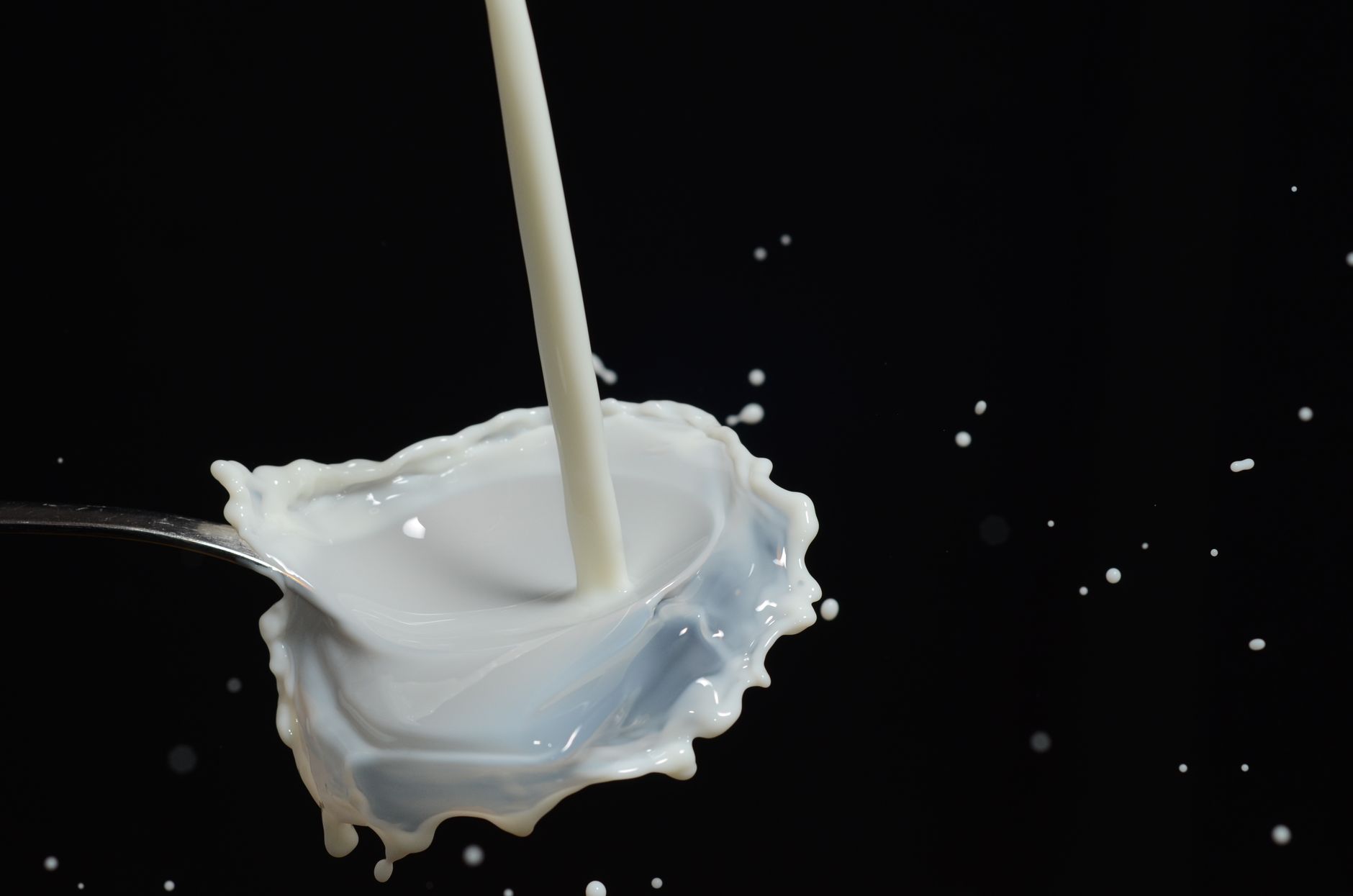
And if you search for images for calcium online, you get a whole lot of photos of milk.
Well, it’s not as easy as “Drink your milk.”
What if you can’t drink milk, or consume any dairy, for that matter?
What form of calcium is best?
How much?
When?
In combination with what other foods?
See? Questions! Let’s break it all down (like osteoclasts), so we can build it all back up again.
Calcium & Osteoporosis
As a personal trainer from the age of 26 who specialized in women’s strength training, nutrition and wellness, I thought I knew what there was to know about calcium.
In the past couple months, since my diagnosis of osteoporosis, I have learned some fascinating things about this cool bone-building buddy.
Let’s start at the beginning (ish).
1. Why is calcium so important?
Most people know calcium builds bones, but that’s only part of the story.
Calcium is also essential for:
- muscle contraction
- nerve function
- heart rhythm
- blood clotting
- cell signalling
Because these functions are so critical, your body works hard to keep calcium levels in your blood within a very narrow range.
That leads to the next question…
2. If I don’t eat enough calcium, where does my body get it?
Your skeleton isn’t just a framework. It’s also a calcium bank.
If your body needs calcium and you’re not getting enough from food, it can withdraw calcium from your bones to keep everything else functioning.
Bones are constantly making deposits and withdrawals. The goal is to keep the balance tipped toward deposits.
3. Is osteoporosis simply a calcium deficiency?
We’ve previously discussed many influences of osteoporosis, including chronic inflammation, genetic predisposition, autoimmune and other disorders, the 10-year post-menopausal window and certain medications.
So, no.
Osteoporosis is not simply a lack of calcium.
It’s a condition involving bone remodelling. Bone is living tissue. Old bone is continually broken down while new bone is built.
Hormones, exercise, nutrition, age, inflammation, genetics, medications and many other factors influence this process.
Calcium is one piece of a much bigger puzzle.
4. How much calcium do we need?
Now, we get into it! This information can vary from country to country.
According to Osteoporosis Canada:
“Calcium Recommended Daily Allowance (RDA)
(this includes your diet and supplements)Females: 19-50: 1000mg daily
Over 51: 1200mg daily
Males: 19-70: 1000mg dailyOver 70: 1200mg daily” 1
It is best to distribute your calcium intake over the course of your day and not all at once. Aim for 250-400mg per meal, depending on how many meals you prefer: 3 main meals or maybe 4 or 5 smaller ones.
5. Is food better than supplements?
Food provides:
- calcium
- protein
- magnesium
- phosphorus
- potassium
- dozens of other nutrients
All packaged together.
“Osteoporosis Canada recommends that whenever possible to get calcium through food sources, choosing a variety of foods to get the Recommended Daily Allowance (RDA).”
Calcium has a lot going on so we’ll break it up into several posts.
Namely:
“Not all food sources that list calcium as a nutrient are absorbed by the body.
Many foods contain calcium however, the calcium in some foods such as sesame seeds, rhubarb, Swiss chard and spinach is not well absorbed due to their oxalate content. Oxalates bind calcium prohibiting calcium absorption.
They have other nutrients but are not a good source of calcium when calculating your daily intake.”
We will give oxalates its own post.
In the meantime:
What if you can’t, or choose not to, eat dairy?
6. What foods contain calcium besides dairy?
You can include things like:
- sardines with bones
- canned salmon with bones
- tofu (calcium-set)
- sesame seeds/tahini (I’ll talk about the oxalate issue later and how to adjust for it)
- almonds (same oxalate issue)
- leafy greens like kale, collards, bok choy…
- fortified plant milks
Fun Fact:
One cup cooked bok choy contains upwards of 160mg of calcium. It’s calcium is easily-absorbed and highly bio-available (low oxalate). I LOVE bok choy. The local farmers market offers these amazing, huge, greenhouse-grown bok choy and I chop one up, toss it on a baking sheet, drizzle with extra virgin olive oil and eat with my breakfast, lunch or dinner. Yum!
According to Bone Health & Osteoporosis Foundation (*amounts may vary): 2
| Produce | Serving Size | Estimated Calcium* |
| Collard greens, cooked | 1 cup | 266 mg |
| Broccoli rabe, cooked | 1 cup | 100 mg |
| Kale, cooked | 1 cup | 179 mg |
| Soybeans, cooked | 1 cup | 175 mg |
| Bok Choy, cooked | 1 cup | 160 mg |
| Figs, dried | 2 figs | 65 mg |
| Broccoli, fresh, cooked | 1 cup | 60 mg |
| Oranges | 1 whole | 55 mg |
Supplements can be helpful when dietary intake is inadequate, but they’re intended to supplement—not necessarily replace—a nutrient-rich diet. We’ll cover these in a separate post, along with how much is too much calcium.
You’ll get no judgement from me on your choices. It’s not about what calcium source is right…
It’s about what calcium source is right for you!
There’s a lot more to talk about with calcium and we’ll get to it all.
For now, I’d like to take a moment to de-list, de-compartmentalize, and de-research our friend calcium.
Before we continue exploring studies and supplements, I’d like to zoom out. It’s easy to reduce calcium to a number on a nutrition label or a bottle on the kitchen counter. But our bodies don’t think in lists. They think in relationships. Calcium is one participant in an elegant dance of hormones, organs, minerals, movement, and constant communication.
It is an incredible symphony of cellular vibration. When we look at calcium in food, like oatstraw infusion, it is part of a harmonious balance that makes up the plant. This plant intelligence is part of what nourishes our own bodies.
It can be easy to micromanage nutrients and isolate organ processes. But this is your beautiful body!
Yes, there may be some misfiring between cells or crossed wires of communication, but as my son often points out when I call him with a computer problem: “Perhaps the issue is somewhere between the keyboard and the chair.”
Meaning: ME!
Perhaps the osteoporosis issue is somewhere between the brain and the heart, or the brain and the bones, or the genes and the gut, or the lifestyle and the burden, or the lack of access to health care and nutrition, or …
We’re still unpacking.
I am not just writing about osteoporosis. I’m writing about trusting the intelligence of the body.
Osteoporosis just happens to be the doorway.
I’m not trying to out-Google the internet. I’m hoping to help folks feel empowered about managing osteoporosis and perhaps recover a sense of relationship with their bodies—through evidence, yes, but also through wonder.
I like to think my years of mind-body practice, along with my natural curiosity for science, creates something neither one can do alone: evidence illuminated by reverence.
Thanks for coming along with me on this adventure into bone health.
As you begin to plan your meals around your calcium and check labels for milligrams, take a moment to appreciate the body as a whole, along with the whole foods you eat, and send the bones some love and gratitude for all they do for you.
Much love,
Stephanie
Subscribe to the blog to receive the daily posts right in your inbox.
You are also welcome to subscribe to my monthly newsletter: